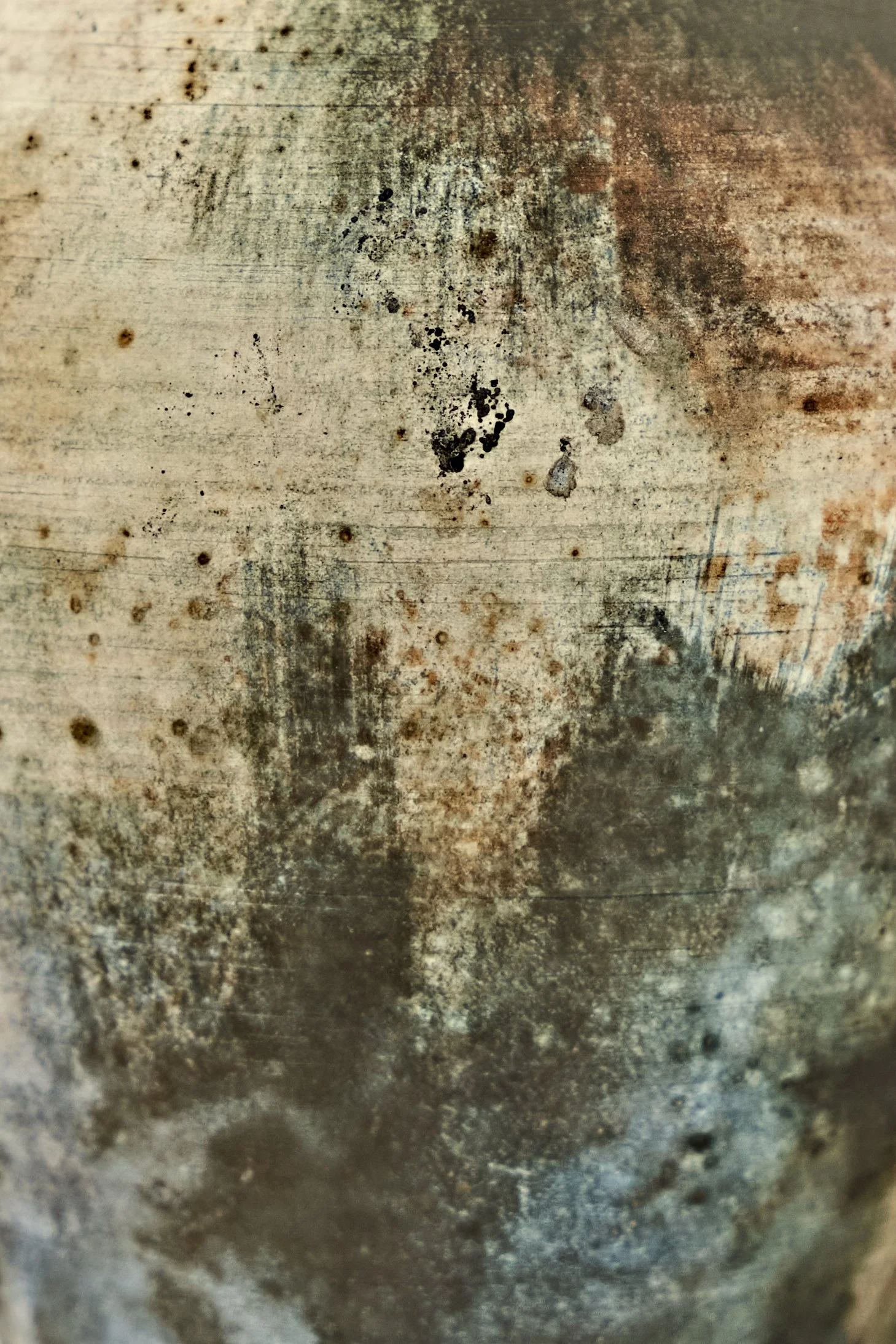
Why No Two Pit-Fired Pieces Can Ever Be the Same
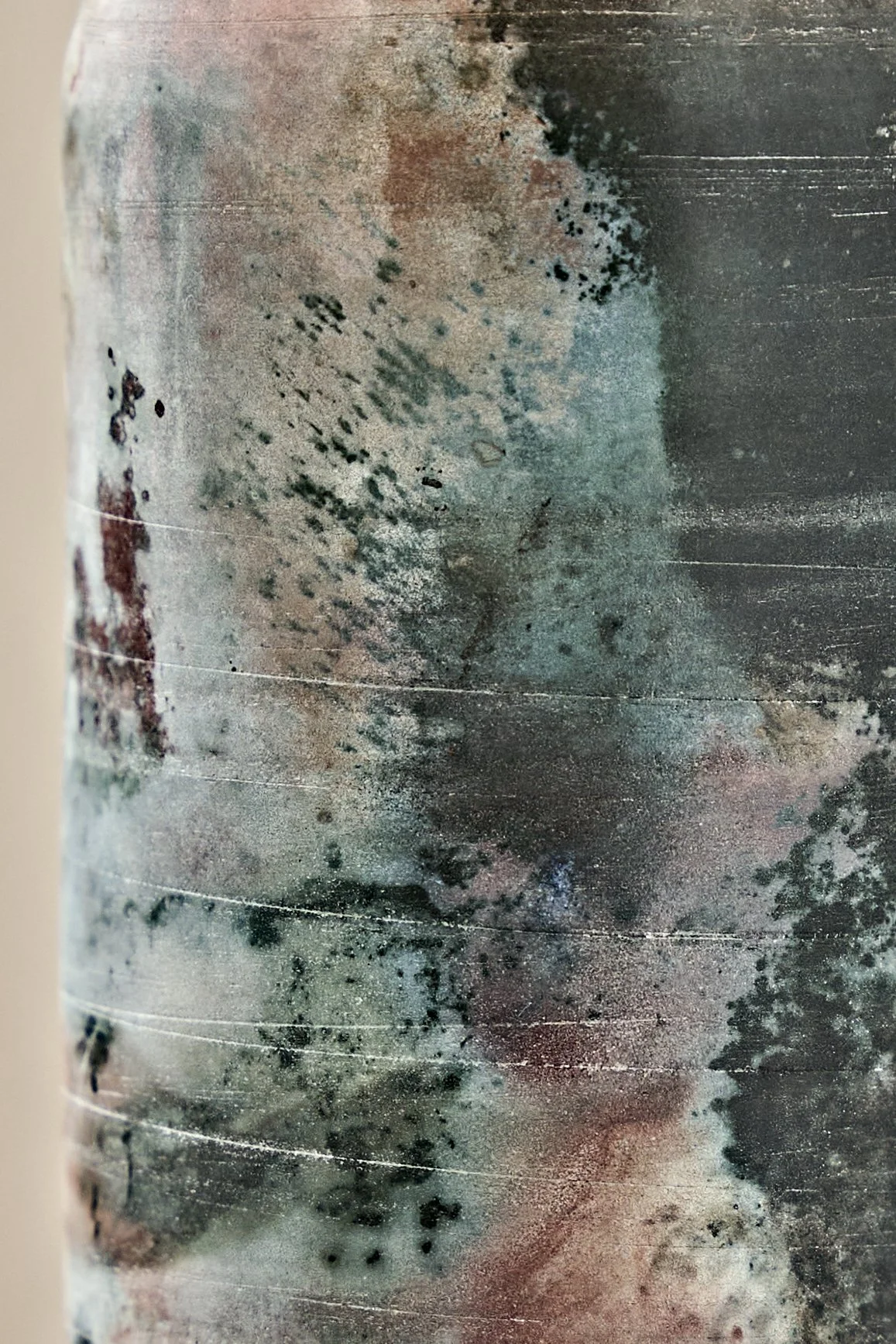
In a world increasingly defined by precision and replication, pit firing remains beautifully resistant to control.
No two firings are identical.
No two surfaces can be repeated.
No matter how carefully the process is planned, there are always variables that remain beyond the reach of the maker. Fire moves where it chooses. Smoke finds its own pathways. Minerals react according to conditions that shift moment by moment.
This unpredictability is not a flaw in the process.
It is the essence of it.
Every pit-fired lamp and vessel created at Candere Clay is the result of a unique collaboration between clay, fire, minerals, atmosphere, and time. The finished surface is not designed in the conventional sense. It is discovered.
An Ancient Conversation with Fire
Pit firing is among the oldest ceramic traditions in human history.
Long before electric kilns and digital controllers, ceramic vessels were transformed through direct contact with flame, smoke, and the earth itself. The process remains remarkably elemental.
Pieces are carefully placed within a firing chamber and surrounded by organic materials and mineral-rich compounds. Wood, leaves, seaweed, tea leaves, banana peels, coffee grounds, and various oxides may all become part of the firing.
What happens next is difficult to predict with precision.
As temperatures rise, organic materials begin to carbonize and burn. Minerals break down, migrate, and react. Smoke deposits carbon onto the clay surface. Certain compounds vaporize and travel through the chamber before settling elsewhere.
The entire firing becomes a living system.
Countless interactions are unfolding simultaneously.
The Variables That Shape a Surface
Every pit firing contains an extraordinary number of variables.
The exact placement of a piece.
The amount of oxygen present.
The moisture content of organic materials.
The intensity of the fire.
The direction of airflow.
The concentration of minerals.
Even subtle shifts in weather can influence the final result.
A banana peel placed against one side of a vessel may create a warm halo of color.
A handful of tea leaves may leave delicate markings that resemble brushwork.
Smoke may darken one surface while leaving another nearly untouched.
Small differences in conditions produce dramatically different outcomes.
The same firing materials used twice will never create the exact same result.
Fire as Collaborator
Many ceramic processes are designed to minimize uncertainty.
Pit firing embraces it.
There is preparation, certainly. Materials are selected intentionally. Placement is considered carefully. Experience informs each decision.
Yet the maker never possesses complete control.
The fire becomes a collaborator.
It contributes its own decisions.
Its own marks.
Its own voice.
Some of the most beautiful surfaces emerge from reactions that could never have been anticipated beforehand. A flash of color appears unexpectedly. Smoke traces a pattern more complex than any hand could draw. Carbon settles in ways that feel both random and deeply harmonious.
The process continually reminds me that beauty is not always something we impose.
Sometimes it is something we allow.
A Record of a Singular Moment
What I love most about pit-fired ceramics is that they preserve evidence of a specific event.
Each vessel becomes a record of a particular firing.
A particular arrangement of materials.
A particular day.
A particular flame.
The markings on the surface cannot be separated from the circumstances that created them. They are traces of a moment that will never occur again in exactly the same way.
This is true whether the piece is a vessel resting quietly on a shelf or an oil lamp glowing softly in the evening.
The surface carries a history.
A memory of smoke.
A memory of fire.
A memory of transformation.
Bringing Nature Into the Home
Pit-fired pieces possess a quality that is difficult to manufacture.
They feel alive.
Not because they are perfect, but because they reveal the participation of natural forces. The surfaces contain variation, movement, and subtle irregularities that mirror patterns found throughout the natural world.
Cloud formations.
Stone weathered by wind.
Tree bark.
Riverbeds.
No two are alike.
The same is true of pit-fired ceramics.
When a pit-fired vase holds a branch gathered from the garden or a pit-fired lamp casts a warm glow across a room, it brings a small piece of that wildness indoors.
A reminder that nature does not repeat itself.
And neither does fire.
The Beauty of What Cannot Be Repeated
There is comfort in objects that are unique.
Not because they are rare, but because they remind us that life itself is unrepeatable.
Every season unfolds differently.
Every sunset arrives with its own colors.
Every flame burns in its own way.
Pit-fired ceramics belong to this same family of experiences.
They emerge from a process that values participation over control and discovery over certainty. Their surfaces are shaped by countless interactions that can never be perfectly recreated.
For this reason, no two pit-fired pieces can ever be the same.
And I believe they are more beautiful because of it.
Each lamp.
Each vessel.
Each mark left by smoke and flame.
A singular expression of earth, fire, and time.